From geopolitics to geobacter: rethinking digital infrastructure
4 March 2026
‘We started the lab because we are both interested in the question of how power and conflict are embedded in infrastructure,’ Jansen and Ten Oever explain. ‘At the same time, we also want to offer perspectives and not just criticise: we strive for a digital infrastructure that puts people and the environment centre stage.’
We are stuck in the idea that digital infrastructure can grow endlessly. But it runs on physical resources, energy and labour, which are anything but boundless.Niels ten Oever, critical infrastructure lab
Pollution
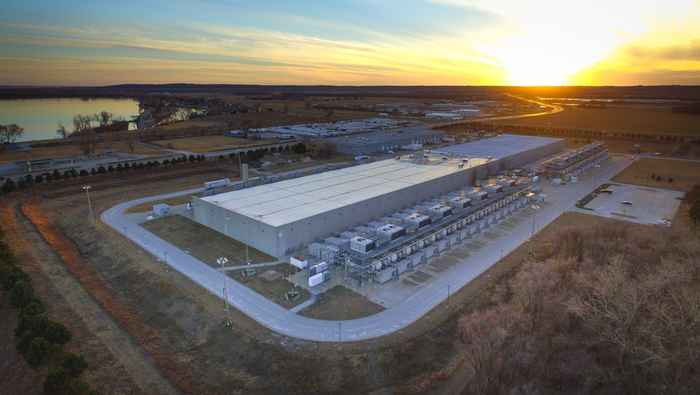
That vision still runs counter to current industrial and political realities. For example, the European Commission has set itself the goal of tripling the number of data centres in the next five years. Scaling up digital infrastructure is presented as necessary in order to compete with the United States and China.
‘The only question is what you actually gain if you win that race,’ says Ten Oever. ‘I can give you the answer: a ruined planet. It is necropolitics. We are stuck in the idea that digital infrastructure can grow endlessly, as if development and use were immaterial. But digital systems run on physical resources, energy and labour. They are anything but boundless.’
According to Ten Oever, there used to be different visions of what computing could look like. ‘Silicon Valley won that battle and set the standard for chip production. The chips we use today are the result of an extremely polluting and extractive industry.’
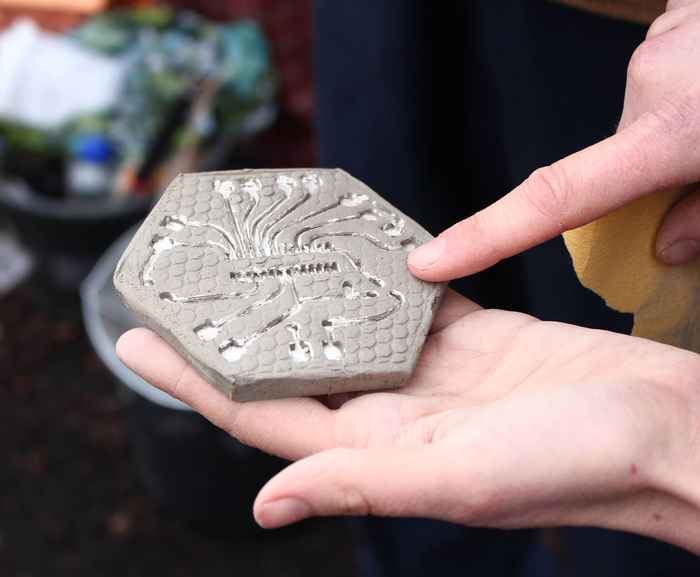
Silicon, a scarce raw material, is currently the standard for chip production – which causes significant environmental damage. However, you can also connect to the internet using a clay motherboard. In this tutorial, you can learn how to make one yourself.
A different way of thinking
If we are to change course, that requires not only technical innovation but also different ways of thinking. Jansen and Ten Oever see an important role for the humanities here. ‘Digital infrastructure is deeply entangled with political and economic interests. Scholars in the humanities can analyse and interpret those power structures.’
Producing our own electricity changed our way of thinking. We no longer asked: how much energy do we need, but: how can we optimise this system?
Change requires close cooperation with the people who actually develop technology. For Europe, Ten Oever believes, this offers an important opportunity: to invest more strongly in open software and open hardware, and to organise innovation through collaboration between government, universities, civil-society organisations and the private sector. ‘There is an opportunity for us there as well. We do not want to analyse everything from a distance, but to stay close to the people who develop the technology – especially because that is what yields the most interesting ideas.’As a concrete example, he shows three jars of mud containing a so‑called geobacter bacterium. This bacterium breaks down organic material and in the process releases electrons that can be used to generate electricity.
‘By starting to produce our own electricity, we suddenly created our own small‑scale electricity infrastructure. That changed our way of thinking. We no longer asked: how much energy do I need to use this product? Instead, we asked: how can we optimise this system so that we can manage with this bacterium alone? This shift in thinking feels awkward at first, but we discovered that it actually contains an enormous amount of freedom.’
Advisory work
With their vision, the Critical Infrastructure Lab advises a wide range of policy-makers, including the European Union and the City of Amsterdam. ‘Together with Leitmotiv, Advocates for the Future, Bits of Freedom and DeGoedeZaak, we sent a letter about the plan to build three data‑centre towers in Amsterdam,’ Jansen explains. ‘Those towers together could potentially consume as much electricity as all Amsterdam households combined.’
The coalition has also sought legal advice on the lawfulness of the permitting procedure. These findings are being shared with members of the municipal council and the Provincial Executive. ‘That fits within the broader research into how we currently organise the governance of data centres,’ says Jansen, ‘and what that would need to look like if, instead of power and capital, we were to put people and the planet first.’
The lab is currently also working on a study for the European Commission on the technical impact of digital sovereignty. ‘It is remarkable to see that our work actually has an effect,’ Ten Oever concludes. ‘Policy-makers know where to find us, and when they do, we hope to inspire them.’